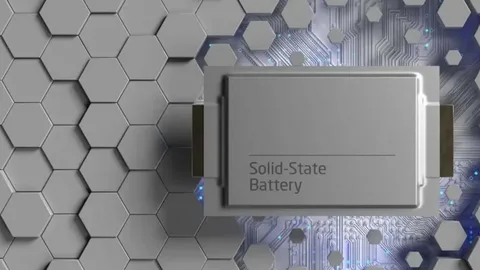
The global energy storage market is rapidly evolving and growing as this change is driven by the buyers’ desires for battery systems that can be used safely, operate in an efficient way, and are less harmful to the environment. The leading technology in this transformation is a solid-state battery that uses a solid electrolyte instead of a liquid one to achieve major benefits through its higher energy density, improved safety features and extended operational lifespan. In this article, we look at the solid-state battery market around the world, discuss the new trends in the market, point out the main uses, and give forecasts of the whole industry worldwide.
Understanding Solid-State Batteries
Solid-state batteries represent a daring new step in energy storage using a different design that swaps around traditional batteries’ liquid or gel electrolytes for solid electrolytes, thus removing the major drawbacks of old lithium-ion batteries. In fact, this project has been going on for years, and safety aspects have been greatly improved with this design by greatly lowering the chance of thermal runaway and fire hazards. These batteries promise even higher energy density, since lithium metal anodes can be used to pack more energy into a given space. On top of that, the ability of their reduced dendrite formation to allow them to be cycled for a longer time without damage is more than a bonus; it is the fact that the very long performance reliability is ensured. In addition, it has been proven that the superior temperature tolerance of the batteries makes it possible to operate the usage of the batteries under extreme hot and cold conditions. With these benefits, major car manufacturers, electronic consumer brands, and companies involved in generating power from renewables are all keening these batteries as they come closest to the combination of safety, efficiency, and high-performance energy storage that can be tailored to varied applications all over the world.
Global Market Overview
The solid-state battery market has expanded rapidly during the past several years of technological advancements and rising demand from electric vehicles and portable electronic devices. The research and development spending across the world will increase at a rate exceeding 25 per cent each year, according to Pristine Market Insights that demonstrates the sector’s growing capacity for innovation and commercial development. The key drivers of growth include the advent of more electric vehicles as a result of government incentives, increased deployment of smartphones, laptops, and wearable devices that demand safer and more durable batteries, along with environmentally conscious factors that lead to energy-efficient solutions. Asia-Pacific is rising as a hub for both research and production, including some technology buy leaders in North America and Europe.
Emerging Trends in the Solid-State Batteries Market
- Hybrid Designs with Electrolytes and Metal Anodes: Integrating solid electrolytes with lithium metal anodes would substantially increase the energy density for batteries’ ability to hold power within smaller volumes. The compact size of these devices makes them highly attractive for use in both electric vehicles and portable electronic equipment. In fact, hybrid structures are not only breaking through size constraints but also enhancing overall battery performance.
- Strategic Partnerships Between Automotive and Battery Companies: Joint ventures between auto makers and battery manufacturers not only speed up the research and development of new technologies but also increase the capacity for production on a large scale. By sharing knowledge and facilities, the time of launching new and improved batteries into the market is significantly shortened. Through these joint efforts, the project resolves its manufacturing capacity restrictions that enables the solid-state technology to be deployed across multiple industrial sectors.
Key Applications of Solid-State Batteries
Not requiring a liquid electrolyte, solid-state batteries are on track to make inroads in a variety of sectors, markedly by virtue of their versatility and high performance. Major applications include:
- Electric Vehicles: Solid-state batteries enable vehicles to drive longer distances as they provide energy storage and fast charging capabilities that serve both passenger cars and commercial trucks. The product’s advanced safety features and extended operational life make it suitable for deployment in buses and trucks that require heavy-duty vehicle capabilities.
- Consumer Electronics: The batteries provide long-lasting power together with dependable operation to improve the performance of portable devices such as smartphones and laptops. The batteries enable safe downsizing to create wearable devices that include smartwatches and medical equipment.
- Renewable Energy Storage: The system delivers secure energy storage solutions for renewable energy systems that connect to electricity grids that use solar and wind power. The system functions effectively in off-grid areas as its extended battery life allows it to operate through various temperature changes.
- Aerospace and Defence: The lightweight batteries deliver high energy capacity enables electric aircraft and unmanned aerial vehicles to operate at higher levels of performance and longer operational times. The technology provides military units with dependable power sources which power their essential operational tools.
Challenges and Opportunities
The solid-state battery industry offers a promising growth scenario; no doubt, however, there are some real challenges. Its main problems are high production costs, scarcity of top-quality lithium and new solid electrolytes, and the difficulty of fitting into already existing systems due to redesign, safety, and infrastructure needs. The good news is that these problems raise the level of inventiveness of the industry. For example, they can lead to the production of affordable solid electrolytes, the creation of high-volume automated production, a partnership between car manufacturers, battery suppliers, and research institutes, opening up the way to launching products and gaining market.
Industry Forecast and Outlook
The market is about to experience its next significant advancement, while experts forecast that these batteries will achieve global adoption within the next ten years. The speed of this expansion will depend mainly on two factors include advancements in solid electrolytes and lithium metal anodes, and large-scale production capabilities. Innovations may primarily come from North America and Europe, while Asia-Pacific will likely become the main production centre owing to the favourable government policies, well-established supply chains, and production at lower costs. Meanwhile, regions such as Latin America and the Middle East that are still in the process of development might gradually start using these batteries, most probably for energy storage in the renewable power sectors.
Future Outlook of the Solid-State Battery Market
The solid-state battery industry is a major transformation of energy storage. It offers the advantages of enhanced safety, improved performance, and being environmentally friendly. Further, the emergence of hybrid models, innovative manufacturing techniques, and alliances is a factor behind the greater adoption of these batteries in electric vehicles, consumer electronics, renewable energy, and aerospace. The market will experience strong worldwide expansion due to more funding and research efforts. Major opportunities will be created by the industry players, technology innovators, and financiers in developing the energy solutions of the future.
Author Bio:
Teja Kurane is a Research Analyst with a strong focus on emerging technologies and evolving industrial markets. With experience in tracking innovation-driven sectors, Teja provides data-backed insights on market trends, growth opportunities, and competitive landscapes. His work frequently explores advancements in energy storage, including developments shaping the global solid-state battery market.