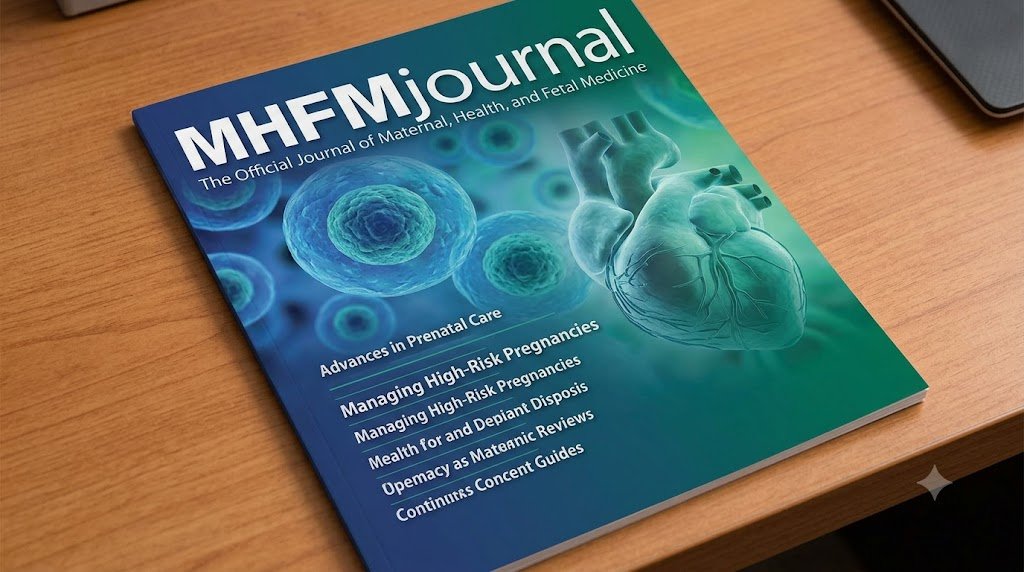
The keyword mhfmjournal.com refers to a website with an unusually complex history. The domain is associated with older academic papers from Mental Health in Family Medicine, but its current homepage operates more like a general online magazine covering business, software, gaming, cryptocurrency, streaming, technology, and lifestyle guides.
That distinction matters. Someone reaching the domain through an old university citation may expect a traditional medical journal, while a visitor arriving through Google today may encounter an article about cars, software, entertainment platforms, finance, or digital trends.
This article explains what mhfmjournal.com currently is, its connection to an earlier medical publication, the types of content available on the domain, and how readers can assess the credibility of individual pages.
What Is mhfmjournal.com?
At present, mhfmjournal.com is an active content website publishing articles across several broad categories. Its main navigation includes Business, Software, Gaming, Streaming, Guides, News, Crypto, and additional topics. Recent homepage content has included articles about Toyota drivetrains, Romanian coffee traditions, cryptocurrency projects, anime streaming, software tools, and public figures in technology.
However, other pages on the same domain present a different identity.
The About page describes the publication as the “Mental Health and Functional Medicine Journal” and says it explores the relationship between clinical psychology, systems biology, nutrition, the microbiome, inflammation, mental health, and athletic performance. A separate homepage at the /home/ path combines mental-health language with sports-performance messaging.
As a result, the most accurate description is that mhfmjournal.com is a mixed-purpose publishing domain containing:
- A current general-interest magazine-style homepage
- Health, wellness, functional medicine, and sports-related branding
- Archived or reuploaded academic papers
- Technology and business guest-post material
- Content from several unrelated subject areas
It should not automatically be treated as a single-topic medical journal merely because of its domain name or historical associations.
Why the Website’s Identity Can Be Confusing
The letters “MHFM” have historically been associated with Mental Health in Family Medicine. This was a recognised journal title with print ISSN 1756-834X and online ISSN 1756-8358.
The official ISSN Portal confirms that the online title is Mental Health in Family Medicine, identifies it as a United Kingdom publication, and connects the online ISSN with the print record. The record points to an older Radcliffe publishing address rather than identifying the present mhfmjournal.com homepage as its authoritative publishing platform.
WONCA, the World Organization of Family Doctors, also lists Mental Health in Family Medicine as a former official journal of its Working Party on Mental Health. Its listing names Dr Gabriel Ivbijaro as editor-in-chief, gives the same print and electronic ISSNs, and identifies Radcliffe Publishing as the publisher.
The current website uses the similar but different title “Mental Health and Functional Medicine.” That is not the same wording as the ISSN-confirmed title “Mental Health in Family Medicine.”
This creates at least three identities that readers may encounter:
- The historical academic journal, Mental Health in Family Medicine
- The current health-oriented description, Mental Health and Functional Medicine Journal
- The live general-interest website branded as Sports Journal
These identities overlap on the same domain, but they should not be assumed to represent the same editorial organisation, publication process, or level of academic review.
The Historical Academic Journal Behind the Domain
Mental Health in Family Medicine began publishing under that title in 2008. Library records describe it as a continuation of Primary Care Mental Health, which had been published earlier. The journal focused on mental-health care within family medicine and primary-care settings.
An introductory editorial published in 2008 described the journal’s purpose as strengthening the role of primary care in addressing mental illness and promoting better integration between family medicine and mental-health services. The editorial was written by Gabriel O. Ivbijaro, who was identified as editor-in-chief.
Older issues included research, reviews, editorials, clinical discussions, and papers addressing subjects such as:
- Mental-health integration in primary care
- Depression and anxiety
- Screening in family medicine
- Post-traumatic growth
- Intimate partner violence
- Mental health among military veterans
- Mental-health services for refugees
- Autism diagnosis in adults
- Body-worn cameras in psychiatric settings
- Physical and mental-health comorbidity
A substantial collection of earlier articles was included in PubMed Central, where readers can still access journal material independently of the current website. For example, PubMed Central contains the journal’s 2008 editorial and numerous papers from its earlier volumes.
This independent archiving is useful because it allows researchers to verify the publication details of older papers without relying entirely on the present state of mhfmjournal.com.
Historical Journal and Current Website Compared
| Feature | Historical academic publication | Current mhfmjournal.com website |
|---|---|---|
| Main identity | Mental Health in Family Medicine | General magazine, Sports Journal, and health-oriented publication |
| Primary subject | Mental health in family medicine and primary care | Business, software, gaming, crypto, streaming, guides, health, and sports |
| Confirmed identifiers | Print ISSN 1756-834X and online ISSN 1756-8358 | No clearly displayed publication identifier on the main general-interest homepage |
| Historical publisher | Radcliffe Publishing | Current publishing ownership is not clearly explained on the pages reviewed |
| Editorial leadership | Historical records name Dr Gabriel Ivbijaro | Current pages prominently show individual article authors but provide limited institutional detail |
| Academic archiving | Older material appears in PubMed Central and library records | New general-interest articles appear primarily on the website |
| Submission focus | Scholarly and clinical material | Guest-post page invites technology-related articles and mentions backlink opportunities |
| Reader expectation | Researchers, clinicians, healthcare professionals, and academics | General web users, technology readers, investors, gamers, and lifestyle audiences |
The comparison does not mean that every current article is unreliable or that every historical paper is automatically correct. It means the two content environments should be evaluated differently.
What Content Is Published on mhfmjournal.com Today?
The live homepage is organised more like a digital magazine than an academic journal. Its categories cover a wide range of unrelated topics.
Business and Finance
The business section includes material about technology founders, personal net worth, investment disputes, trading software, cryptocurrency companies, and business personalities. Some articles address subjects involving financial claims or investment opportunities.
Readers should treat financial content as general information unless it is supported by primary documents, regulatory records, audited financial statements, or recognised financial reporting. An article published on a general website is not a substitute for professional financial advice.
Software and Technology
The software section includes tutorials, product explanations, educational platforms, internet tools, and software compatibility topics. Examples displayed on the site include AutoCAD-related material, Gimkit instructions, and Wi-Fi management guides.
These pages may be useful as introductory explanations, but software information can become outdated quickly. Readers should confirm installation instructions, system compatibility, pricing, and security requirements through the software developer’s official documentation.
Gaming and Streaming
The site also covers gaming platforms, anime-streaming websites, digital entertainment, and access guides. Streaming-related pages require additional caution because a platform’s legality, ownership, domain address, and security status may change.
A guide that accurately described a platform when published may no longer reflect its current condition. Users should avoid downloading unknown files, installing unofficial browser extensions, or entering payment details on unverified streaming platforms.
Cryptocurrency
Cryptocurrency content appears prominently on the homepage and in the business section. Some headlines discuss price predictions, presales, investment potential, and comparisons between crypto projects.
Price forecasts and presale claims are speculative by nature. Readers should verify whether a token has an identifiable development team, published smart-contract address, independent security audit, transparent token allocation, and listings confirmed by the exchanges themselves.
Health and Sports Material
Some pages present the site as a resource about mental health, functional medicine, athletic performance, nutrition, inflammation, recovery, and the gut-brain relationship.
Health-related claims require a higher evidence standard than ordinary lifestyle content. Advice about supplements, mental-health treatment, nutrition, inflammation, or medical conditions should be compared with clinical guidelines and peer-reviewed research.
Medical disclaimer: Online content should not be used to diagnose or treat a medical or mental-health condition. Personal health decisions should be discussed with an appropriately qualified healthcare professional.
Are the Older Research Papers Still Available?
Yes, some older papers connected with Mental Health in Family Medicine remain accessible through the domain.
For example, search results reveal a 2015 review about the misdiagnosis of autism spectrum disorder in adults and a 2016 review about the mental-health effects of physical intimate partner violence. The PDF documents identify their original journal volume, year, page range, authors, and article type.
There is an easily overlooked detail here: some old papers are stored in WordPress upload folders containing much later dates, such as 2025. That folder date appears to reflect when the file was uploaded or migrated to the present website structure, not when the research was originally published.
A paper labelled “Mental Health in Family Medicine 2015” remains a 2015 paper even when its current file address contains /2025/04/. Researchers should use the publication date printed inside the paper, not the upload-folder date, when creating a citation.
Is mhfmjournal.com a Peer-Reviewed Academic Journal?
The answer depends on which material is being discussed.
The historical publication Mental Health in Family Medicine published scholarly material, had recognised ISSNs, was associated with Radcliffe Publishing, and had content archived in PubMed Central. WONCA also identified it as the official journal of its Working Party on Mental Health.
The current mhfmjournal.com homepage, however, does not resemble a conventional academic-journal homepage. It prominently features general-interest categories and magazine-style articles rather than a clearly organised system of volumes, issues, manuscript policies, peer-review procedures, editorial-board affiliations, and research indexing.
Its guest-post page invites technology submissions, says articles commonly exceed 1,000 words, and mentions that contributors may gain backlinks. That is typical of online publishing and guest blogging, not evidence of scholarly peer review.
Therefore, readers should not describe every page on the present website as peer-reviewed. The peer-review status of an older paper should be assessed from the paper’s original publication record. A new business, software, crypto, or lifestyle article should be treated as web content unless the page provides verifiable evidence of formal academic review.
How Reliable Is mhfmjournal.com?
Reliability varies by page.
A domain-level judgement is less useful than examining the evidence behind a particular article. The historical reputation of a domain does not automatically transfer to every new page published on it.
Signs of a More Reliable Page
A stronger page normally includes:
- A clearly identified author
- Relevant author qualifications
- A visible publication or revision date
- Links to primary sources
- Accurate citations
- Clear separation between facts and opinions
- Disclosures of financial or commercial relationships
- Explanations of limitations and uncertainty
- Contact and correction information
Signs That Require More Caution
Readers should investigate further when a page contains:
- Strong medical or financial promises
- Unverifiable statistics
- Anonymous recommendations
- Price predictions presented as near-certainties
- Claims based only on other blogs
- Missing publication dates
- No explanation of who reviewed the content
- Affiliate or promotional language without disclosure
- A title that does not match the evidence in the article
- Instructions to download files from unofficial sources
The current site’s mixture of academic archives, health branding, technology guest posts, cryptocurrency articles, and general guides makes source-by-source verification especially important.
Is mhfmjournal.com Safe to Visit?
The website currently loads through HTTPS, which encrypts the connection between a browser and the website. HTTPS helps protect data in transit, but it does not prove that every article, advertisement, download, third-party link, or recommendation is trustworthy.
There is not enough verified evidence to label the entire domain malicious merely because its subject matter has changed. At the same time, visitors should follow normal web-safety practices:
- Do not download unknown software or executable files.
- Verify the destination before following external links.
- Avoid sharing financial, identity, or medical information unnecessarily.
- Use official software stores and developer websites.
- Check investment claims against regulatory and primary sources.
- Keep the browser and security software updated.
- Confirm streaming platforms separately before creating an account.
Safety also depends on user behaviour. Reading an ordinary article presents a different level of risk from downloading a program, sending money to an investment project, or entering login credentials on an external website.
How to Verify an Article Found on mhfmjournal.com
A practical verification process can prevent confusion.
1. Identify the Type of Page
First determine whether the page is:
- An old academic PDF
- A current magazine article
- A guest post
- A health explainer
- A software tutorial
- A financial or cryptocurrency article
- A streaming guide
Different page types require different evidence.
2. Check the Original Publication Details
For an academic paper, look inside the document for the journal title, year, volume, issue, page range, authors, affiliations, DOI, PMID, or other identifier.
Do not rely only on the current page title or upload path.
3. Search Independent Databases
Older medical papers can often be checked through:
- PubMed
- PubMed Central
- The ISSN Portal
- University repositories
- Library catalogues
- Crossref
- Google Scholar
Independent database records are valuable because they confirm that an article existed outside the current website.
4. Examine the Author
Search for the author’s institutional profile, publication history, professional licence, ORCID record, or recognised expertise.
A generic author biography is not the same as independently verified credentials.
5. Follow the Evidence
Open the studies, government documents, company filings, official announcements, or technical documentation cited by the article.
A page may look detailed while relying on sources that do not actually support its central claim.
6. Check the Date
Dates matter for software, finance, cryptocurrency, streaming, law, health guidance, and product specifications. A technically accurate article can become misleading when circumstances change.
7. Compare Multiple Sources
For high-impact decisions, compare the information with at least two or three independent authoritative sources. A single article should rarely determine a medical treatment, investment, legal action, or software-security decision.
How Researchers Should Cite Older MHFM Articles
Researchers who find an old paper through mhfmjournal.com should cite the original article rather than treating the current webpage as a newly published source.
A complete academic citation normally requires:
- Author names
- Article title
- Original journal title
- Publication year
- Volume and issue
- Page range
- DOI, PMID, or stable identifier when available
For instance, university repositories identify a 2017 paper titled “Self-reorganization in transition from military to civilian life: Maria’s way” as an article in Mental Health in Family Medicine, volume 13. The repository preserves the bibliographic information even though the linked document was hosted on an older mhfmjournal.com path.
Researchers should also save a copy of the bibliographic record or use an archived link when a source is important. Web addresses can change, while journal metadata offers a more durable way to identify the work.
What Potential Contributors Should Know
The site maintains a guest-post page inviting technology-related submissions. It says articles should be original, relevant to technology readers, properly formatted, and generally at least 1,000 words long. It also refers to exposure and backlinks as possible benefits for contributors.
Before submitting content, a writer should clarify:
- Whether publication is free or paid
- Whether links will be marked sponsored or nofollow
- Who retains copyright
- Whether the article may be edited
- Whether previously published material is accepted
- Whether the contributor receives an author profile
- Whether the content can later be removed or updated
- How corrections and disputes are handled
- Whether promotional relationships must be disclosed
The existence of a “write for us” page does not by itself indicate poor quality. Many legitimate publications accept outside contributions. The key issue is whether the editorial process, commercial terms, authorship rules, and disclosure standards are transparent.
Overlooked Facts About mhfmjournal.com
Several details are easy to miss when assessing this domain.
The Domain Name Preserves Historical Authority
A domain associated with old scholarly papers may continue receiving links from universities, research papers, repositories, and academic bibliographies. Those links can remain active long after the live website changes its focus.
This means a domain may retain the appearance of academic authority even when its newest content follows a different editorial model.
Search Indexing Is Not an Endorsement
Google may display old PDFs, new magazine articles, category pages, and historical references from the same domain. Their appearance in search results does not mean Google has confirmed that they share one publisher or one standard of review.
Each result must be assessed independently.
A New Upload Date Does Not Create New Research
An older PDF moved into a 2025 WordPress folder is still an older publication. The upload path reflects website management, not the date on which the study was conducted, reviewed, or published.
Similar Publication Names Are Not Interchangeable
“Mental Health in Family Medicine” and “Mental Health and Functional Medicine” sound related, but they are not identical titles.
Formal academic identity depends on exact titles, ISSNs, publishers, editorial records, and issue metadata. Small naming differences can signal a different project or a change in branding.
Domain Continuity Does Not Prove Organisational Continuity
A website can be redesigned, repurposed, migrated, or managed under a new editorial strategy without changing its address. Unless ownership and publishing continuity are explicitly documented, readers should not assume that the people currently operating a domain are the same people who managed it years earlier.
This is a general principle of online research, but it is particularly relevant to mhfmjournal.com because its current navigation and historical academic footprint point in noticeably different directions.
Frequently Asked Questions
What does mhfmjournal.com stand for?
The domain has historically been associated with Mental Health in Family Medicine. The current website also uses the phrase “Mental Health and Functional Medicine” on some pages, while its main homepage is branded as a broad Sports Journal and general-interest magazine. The abbreviation therefore does not describe one consistent current identity.
Is mhfmjournal.com still a medical journal?
The domain still hosts or links to older medical-journal papers, but its live homepage currently publishes general articles about business, software, gaming, crypto, streaming, and lifestyle topics. It should not be treated as a purely medical-journal website without checking the specific page.
Are articles from mhfmjournal.com peer-reviewed?
Some older papers from Mental Health in Family Medicine were scholarly journal articles. Current general-interest posts should not automatically be described as peer-reviewed. Check the original journal metadata, volume, issue, author details, DOI, PMID, and indexing record for each academic paper.
Can mhfmjournal.com be used as an academic source?
An older academic paper found on the site may be usable when its original publication details can be verified through PubMed, PubMed Central, a university repository, the ISSN Portal, or another recognised database. Current magazine articles may be useful for background reading but usually require stronger supporting sources.
Why does mhfmjournal.com contain unrelated topics?
The website appears to have undergone a substantial editorial reorientation or repurposing. Its current general-interest homepage, health-oriented About page, sports messaging, academic PDFs, and technology guest-post guidelines reflect different publishing purposes. The site does not clearly explain the full history of these changes.
Is mhfmjournal.com a scam?
Available evidence is not sufficient to label the entire website a scam. Its content quality and purpose vary considerably, however. Readers should independently verify medical, financial, cryptocurrency, software, and streaming claims before acting on them.
Is it safe to download files from mhfmjournal.com?
PDF research papers may be readable directly in a browser, but unknown software, apps, extensions, or executable downloads require more caution. Verify files with the official developer, use security scanning, and avoid installing programs obtained from unconfirmed sources.
Who owns mhfmjournal.com?
The public pages reviewed provide a contact email and article-author information, but they do not clearly present detailed current ownership, corporate registration, publishing leadership, or a complete editorial structure. Readers seeking a commercial or academic relationship should request that information directly and verify it independently.
Conclusion
mhfmjournal.com is best understood as a domain with two distinct layers: a historical connection to the academic publication Mental Health in Family Medicine and a current role as a broad online content website.
Older papers may still have genuine research value when their original publication details are confirmed through recognised academic databases. Newer articles should be evaluated according to their authorship, evidence, date, sourcing, disclosures, and subject matter.
The most important takeaway is simple: do not judge every page by the domain’s historical reputation. Verify the individual article, identify whether it is archived research or current web content, and use independent authoritative sources before relying on it for medical, academic, financial, or technical decisions.