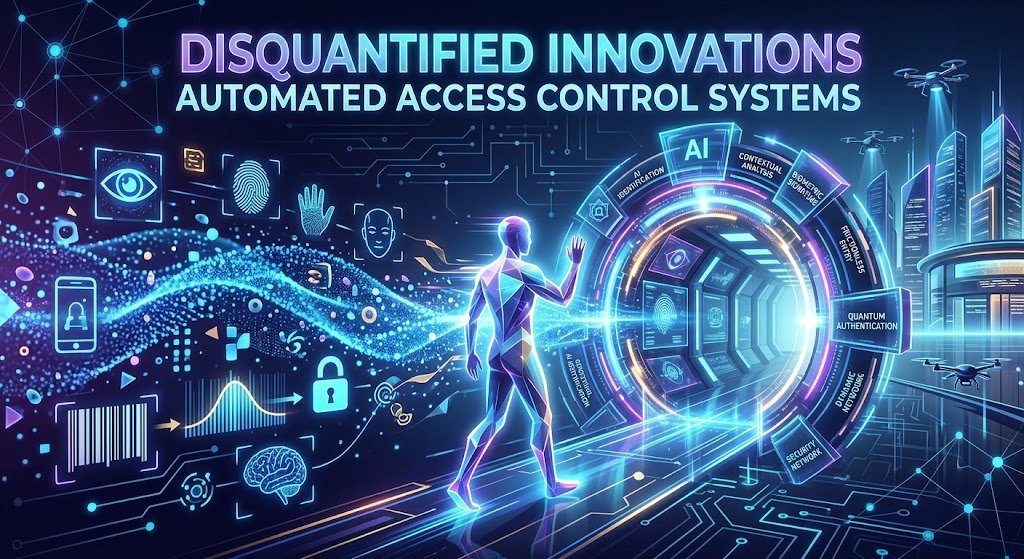
Security used to be a pure numbers game. Facility managers counted the locked doors, the printed badges, and the number of guards on active duty. But today, the landscape has entirely shifted, paving the way for disquantified innovations automated access control systems.
We are moving away from traditional security metrics and focusing heavily on the qualitative aspects of protection. This means looking at how seamlessly an employee can enter a building or how intuitively a system detects an unauthorized anomaly. It is no longer just about counting how many times a door was opened; it is about understanding the context behind every entry.
If you want to protect your assets without creating bottlenecks for your staff, you need to rethink your entire approach. In this comprehensive guide, we are going to dive deep into how disquantified innovations automated access control systems work. We will explore their features, their undeniable benefits, and why they represent the absolute future of corporate security.
What Are Disquantified Innovations Automated Access Control Systems?
To truly grasp this concept, we first need to break down the terminology. “Disquantified innovations” refers to technological advancements that prioritize qualitative improvements over easily measurable, quantitative metrics. When applied to security, disquantified innovations automated access control systems focus on user experience, behavioral analytics, and seamless integration.
In the past, you might have measured a security system by how many thousands of keycards it could process per hour. Today, the focus is on whether the system can authenticate a user without them ever breaking their stride. These modern frameworks utilize advanced Artificial Intelligence (AI) and machine learning to create frictionless environments.
Instead of relying on rigid rules, these setups adapt to the environment in real-time. By utilizing disquantified innovations automated access control systems, organizations can move beyond simple binary “access granted” or “access denied” outputs. The system evaluates the broader context, looking at who the person is, what time it is, and their typical behavioral patterns before making a rapid decision.
The Shift from Traditional to Disquantified Security
For decades, the security industry was trapped in a highly quantified mindset. Vendors sold products based on the sheer volume of data they could process or store. However, sheer data volume does not automatically equate to better security, which is why a transition became strictly necessary.
Why Strict Metrics Aren’t Everything in Access Control
Traditional access systems generated massive logs of entry and exit times. While this data was helpful for audits, it offered very little proactive security. Security teams were drowning in numbers, alerts, and false positives, making it difficult to spot actual threats.
This data overload creates fatigue, causing human operators to miss critical anomalies. Furthermore, strict numerical metrics often result in clunky user experiences. If a system requires three different measurable authentication steps, it slows down employees and significantly reduces workplace productivity.
The Role of Disquantified Innovations Automated Access Control Systems
This is exactly where the paradigm shifts. The primary role of disquantified innovations automated access control systems is to interpret the gray areas of security. They take the friction out of the authentication process by relying on continuous, invisible checks rather than explicit user actions.
By leveraging behavioral biometrics and spatial awareness, these systems verify identity without requiring a badge swipe or a pin code. A user simply walks toward a door, and the system authenticates them based on qualitative traits like their gait, smartphone proximity, or facial structure. Because of this, disquantified innovations automated access control systems provide maximum security with zero user frustration.
Key Features of Disquantified Innovations Automated Access Control Systems
What exactly makes these modern setups so different from the legacy systems installed in most corporate offices? The secret lies in their underlying technology and their holistic approach to facility management.
When you invest in disquantified innovations automated access control systems, you can expect the following core features:
Frictionless Authentication: Users no longer need to fumble for physical credentials. The system uses Bluetooth Low Energy (BLE), ultra-wideband, and facial recognition to grant access seamlessly.
Context-Aware Protocols: The system doesn’t just ask “who is this?” It asks “does it make sense for this person to be here right now?” This drastically reduces insider threats.
Behavioral Analytics: By establishing a baseline of normal behavior for every employee, the system can instantly flag unusual qualitative actions.
Dynamic Threat Responses: In a legacy system, a lockdown requires manual initiation. In disquantified innovations automated access control systems, the environment automatically isolates threats based on fluid risk assessments.
Cloud-Native Architecture: These systems ditch the traditional on-premise servers in favor of agile, decentralized cloud networks that update instantly.
By prioritizing these intuitive features over raw processing numbers, organizations can create a significantly safer workplace.
Benefits of Disquantified Innovations Automated Access Control Systems for Modern Businesses
Upgrading a facility’s security infrastructure is a massive investment of both time and capital. However, sticking with outdated hardware is a much costlier mistake in the long run. The implementation of these advanced tools brings several distinct advantages to the table.
A Vastly Enhanced User Experience
The most immediate benefit of deploying disquantified innovations automated access control systems is the boost in employee satisfaction. Nobody likes waiting in line to scan a badge, especially during the morning rush hour.
When security becomes invisible, the daily friction of office life disappears. Employees feel trusted and empowered, while visitors enjoy a highly professional and welcoming reception. This qualitative improvement in the daily lives of workers is a perfect example of a disquantified innovation in action.
Highly Adaptive Security Protocols
Threats do not operate on a fixed schedule, and your security systems shouldn’t either. Rigid security layers are easy for modern bad actors to predict and bypass. Conversely, disquantified innovations automated access control systems are highly unpredictable to intruders.
Because they rely on continuous behavioral monitoring and Zero Trust Architecture, they can adapt their security layers on the fly. If an employee logs in from an unusual location or attempts to access a restricted floor at an odd hour, the system dynamically increases the authentication requirements. This keeps the premises secure without defaulting to a complete lockdown.
Implementation: Integrating Disquantified Innovations Automated Access Control Systems
Transitioning to a qualitative security mindset requires careful planning and a phased approach. You cannot simply rip out your old card readers overnight and expect a flawless transition. A successful deployment of disquantified innovations automated access control systems starts with a thorough site audit.
First, identify the high-friction areas in your facility—the lobbies, server rooms, and primary entry points. These are the areas that will benefit the most from frictionless, context-aware technology. Next, work with a vendor that understands the philosophy of disquantified metrics. They should prioritize seamless API integrations over proprietary, locked-down hardware ecosystems.
During the rollout, employee education is absolutely critical. Even though disquantified innovations automated access control systems operate largely in the background, your staff needs to understand how their identity is being verified. Transparent communication regarding privacy and data usage will ensure high adoption rates and foster a culture of holistic security.
The Future of Security and Disquantified Innovations
As we look toward the next decade, the line between physical and digital security will continue to blur. The metrics that defined success in the 2010s are rapidly becoming obsolete. Tomorrow’s security platforms will care far less about “how many” and much more about “how well.”
We are going to see disquantified innovations automated access control systems merge with smart building management protocols. Imagine a system that not only unlocks a door but also adjusts the room’s lighting and climate based on the specific qualitative preferences of the person entering. This is the ultimate convergence of security, comfort, and operational efficiency.
Companies that stubbornly cling to traditional, purely quantitative security metrics will find themselves dealing with higher breach rates and frustrated employees. On the flip side, those who embrace these fluid, intelligent frameworks will future-proof their assets against the unknown threats of tomorrow.
Conclusion
The evolution of facility protection is here, and it is largely invisible to the naked eye. We have officially outgrown the era where security was measured merely by the thickness of a vault door or the speed of a card reader.
By implementing disquantified innovations automated access control systems, you are investing in a smarter, highly adaptive, and incredibly user-friendly environment. These tools strip away the frustration of daily access while quietly multiplying your defensive capabilities. It is time to stop counting metrics that don’t matter and start prioritizing the qualitative innovations that truly keep your people and data safe. Start your facility audit today, and take the first critical step toward a frictionless future.
Frequently Asked Questions (FAQs)
1. What exactly are disquantified innovations automated access control systems? These are modern security networks that focus on qualitative metrics—like user experience, seamless integration, and context-aware behavior—rather than purely numerical data like the volume of badge swipes. They use AI and biometrics to create a frictionless authentication process that operates intelligently in the background.
2. How do these systems differ from traditional keycard setups? Traditional setups rely on binary hardware: you either have the correct physical card, or you don’t. Disquantified innovations automated access control systems do not rely on physical tokens. Instead, they use continuous background verification, evaluating a person’s behavior, mobile device proximity, and real-time context to grant access.
3. Are disquantified innovations automated access control systems safe from hacking? Yes, they are generally far more secure than legacy systems. Because they utilize Zero Trust Architecture and dynamic, adaptive security layers, they are incredibly difficult to bypass. If the system detects anomalous behavior, it automatically alters the access requirements in real-time to neutralize the potential threat.
4. Will upgrading to this technology disrupt my current business operations? No, a proper rollout is typically done in phased stages to ensure zero operational downtime. Because these systems heavily rely on cloud-native software and seamless API integrations, they can often piggyback on your existing network infrastructure, making the transition smooth and highly efficient.
5. How do disquantified innovations automated access control systems improve employee privacy? While it sounds like they collect a lot of data, these systems are actually designed with privacy-by-design principles. Instead of storing massive amounts of quantifiable, identifiable tracking logs, they process qualitative biometric hashes locally. This ensures that personal data is protected, keeping the business fully compliant with modern data privacy regulations.