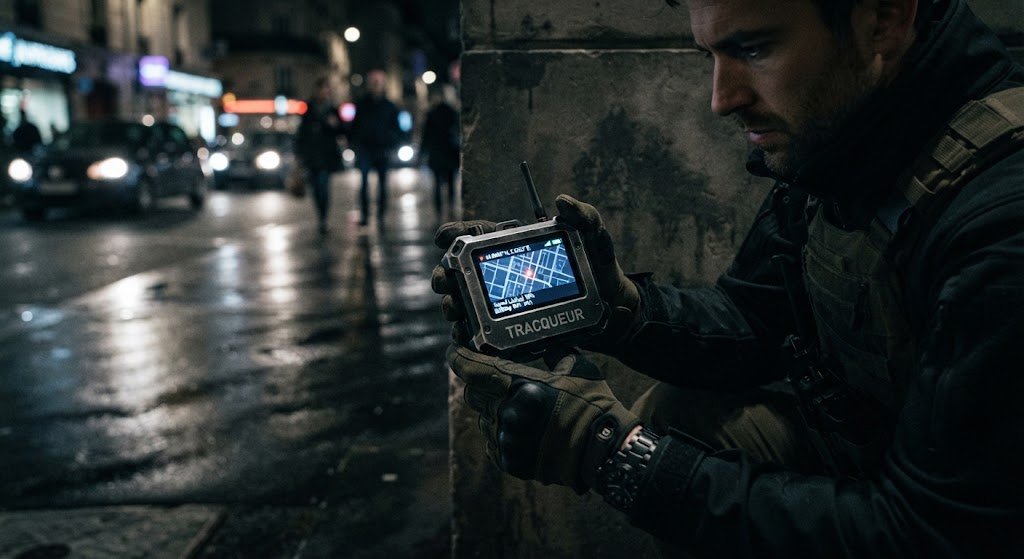
Tracqueur is a term increasingly encountered in searches about GPS devices, asset trackers, location-monitoring systems, and software that records activity. Yet there is an important distinction many explanations miss: Tracqueur is not one universally defined technology. Depending on the context, it may describe a physical tracking device, a software-based monitoring system, or simply an alternative spelling associated with the French word “traqueur,” meaning “tracker.”
That distinction matters.
A vehicle tracker communicating through a cellular network works very differently from a Bluetooth tag attached to a suitcase. A website analytics tracker is different again. Understanding the underlying technologies—not just the label—makes it easier to choose the right solution, judge accuracy, protect personal data, and avoid paying for capabilities you do not actually need.
What Does Tracqueur Mean?
The simplest interpretation of Tracqueur is tracker: something used to locate, follow, monitor, or record the activity of a target.
The established French spelling is traqueur. Collins translates traqueur as “tracker,” while France’s CNRTL dictionary traces the noun to traquer, meaning to track or pursue.
Online, however, the spelling Tracqueur has developed a broader technology-related search intent. It may refer to:
- GPS trackers for cars, motorcycles, equipment, or people
- Bluetooth trackers for keys, luggage, wallets, and other nearby objects
- Fleet-tracking platforms used by logistics companies
- Pet and personal-location devices
- Fitness and activity trackers
- Asset-monitoring systems used in warehouses and industrial facilities
- Software trackers measuring website, app, or device activity
This is why context should always come before assumptions. There is no single technical specification that every product described using this term must follow.
How Does a Tracqueur Actually Work?
A useful way to understand a modern Tracqueur is to stop thinking about it as one device and instead think about it as a tracking stack.
Most sophisticated systems contain four or five layers.
1. The Positioning or Sensing Layer
First, the system has to detect something.
For location tracking, that information may come from GPS/GNSS, Bluetooth, Wi-Fi positioning, cellular networks, RFID, ultra-wideband (UWB), or dedicated sensors. Other tracking applications might record motion, temperature, speed, heart rate, equipment status, or user behavior instead.
GPS is especially important for outdoor tracking. According to GPS.gov, GPS satellites transmit positioning and precise timing information, while receivers use those signals to calculate their three-dimensional position and time.
The crucial detail? GPS itself generally tells a receiver where it is. A separate communications channel is usually needed if somebody elsewhere needs to see that location remotely.
2. The Connectivity Layer
Knowing a position inside the device is only part of the job.
A real-time Tracqueur may transmit information using:
- Cellular networks such as LTE or other mobile-data connections
- Bluetooth Low Energy
- Wi-Fi
- Satellite communications
- LoRaWAN or other low-power wide-area networks
- Proprietary radio networks
The correct technology depends heavily on range, power consumption, coverage, data frequency, and cost.
A Bluetooth tag, for example, is optimized for low-power nearby detection rather than behaving exactly like an independently connected cellular GPS unit.
3. The Data Platform
Tracking data becomes genuinely useful when software interprets it.
A cloud platform or local application may convert raw coordinates and sensor readings into maps, routes, timelines, geofences, dashboards, reports, alerts, and historical trends.
This layer often determines whether a tracker feels basic or intelligent. Two devices can collect similar coordinates while offering dramatically different practical value because their applications handle the data differently.
4. Alerts and Automation
Good tracking systems do not require someone to stare at a map all day.
They can trigger an event when something changes.
Examples include:
- A vehicle leaves an approved geographic area
- Equipment begins moving outside working hours
- A pet exits a predefined safe zone
- A shipment stops unexpectedly
- A vehicle exceeds a speed threshold
- A tracked device has a critically low battery
- An asset reaches a destination
These automated rules transform passive tracking into exception-based monitoring.
5. Data Storage and Retention
Historical data deserves more attention than it usually receives.
Some devices primarily show current location. Others maintain weeks, months, or years of location history. Businesses may use that information for route analysis, operational audits, utilization measurements, theft investigations, or compliance.
Storage, however, creates privacy and cybersecurity responsibilities. More data is not automatically better.
GPS Tracqueur vs Bluetooth Tracker: What Is the Difference?
People frequently compare these technologies as though one is simply better. That is the wrong question.
They solve different problems.
GPS-Based Tracking
A GPS-oriented Tracqueur is typically appropriate when you need to determine where something is across a large geographic area.
GPS satellites provide worldwide positioning capability, and the system is designed so users can receive signals from multiple satellites. GPS.gov notes that the United States maintains at least 24 operational satellites with additional satellites commonly operating in the constellation.
GPS-based systems are useful for:
- Cars and motorcycles
- Commercial fleets
- Construction equipment
- Boats
- High-value mobile assets
- Long-distance logistics
However, satellite positioning and remote communication should not be confused. A GPS receiver may determine its coordinates without cellular service, but transmitting those coordinates to your phone from miles away normally requires another communication mechanism.
That distinction is frequently overlooked.
Bluetooth Tracking
Bluetooth tracking is particularly effective for proximity and indoor-location applications.
Bluetooth technology can be used to determine the presence, approximate distance, and—in advanced implementations—direction of another Bluetooth device. The Bluetooth Special Interest Group describes applications ranging from personal-property finding to real-time asset tracking in facilities.
Bluetooth Direction Finding can go substantially beyond basic proximity detection. Compatible systems can use Angle of Arrival or Angle of Departure techniques for high-accuracy positioning, with Bluetooth SIG documenting implementations capable of centimeter-level accuracy under suitable conditions.
That does not mean an ordinary consumer Bluetooth tag provides centimeter-accurate worldwide tracking. Hardware, network design, implementation, environment, and supporting infrastructure all matter.
Where Is Tracqueur Technology Used?
The value of Tracqueur technology is easiest to understand through actual decisions it helps people make.
Vehicle Security and Fleet Management
Vehicle tracking has moved well beyond displaying a dot on a map.
Fleet systems can combine location history with route efficiency, driver behavior, trip duration, geofencing, utilization, maintenance information, and operational alerts.
A delivery business, for example, may care less about watching every vehicle continuously and more about knowing:
- Which vehicle can reach the next customer fastest?
- Why are particular routes consistently delayed?
- Is unauthorized vehicle use occurring?
- Which assets spend too much time idle?
- Has a vehicle deviated significantly from its assigned route?
The business value comes from converting tracking data into decisions.
Asset and Equipment Tracking
Warehouses, hospitals, construction companies, manufacturers, and logistics operators often lose time searching for equipment that technically is not lost—it is simply not where people expect it to be.
A properly designed locating system can reduce search time, identify equipment bottlenecks, improve utilization, and reveal whether additional inventory is genuinely necessary.
Bluetooth SIG specifically identifies real-time locating systems as a use case for tracking assets and people inside facilities such as warehouses and hospitals.
Personal Belongings and Luggage
For keys, bags, wallets, cameras, and luggage, size and battery longevity often matter more than continuous GPS reporting.
A compact Bluetooth-based device may therefore be a better solution than a power-hungry cellular unit.
The right question is not, “Which tracker has the longest range?”
It is, “What happens when the item leaves my immediate range, and what infrastructure allows me to find it afterward?”
That exposes one of the biggest differences between tracker ecosystems.
Pet and Personal Safety Tracking
Tracking technology can help locate pets, children, elderly family members, lone workers, and people participating in outdoor activities.
These applications require particularly careful consideration of battery life, signal coverage, location-refresh intervals, emergency features, reliability, and consent.
A tracker that lasts three months but reports location too infrequently may be useless for one application. A device updating every few seconds may provide excellent visibility but drain its battery quickly.
There is always a trade-off.
Real-Time Tracking Is Not Truly “Continuous”
The phrase real-time tracking deserves scrutiny.
Most systems do not transmit an infinitely continuous stream of coordinates. They report at intervals, when movement occurs, after specific events, or according to power-management rules.
A Tracqueur updating every five seconds behaves very differently from one updating every ten minutes.
That difference affects:
Battery consumption. Frequent GPS measurements and network transmissions generally consume more energy.
Data costs. Cellular devices may require subscriptions or connectivity charges.
Operational visibility. Fast-moving vehicles may need frequent updates, whereas stationary equipment often does not.
Server load and storage. More frequent readings create larger datasets.
Therefore, buyers should ask for the actual location update interval, not simply accept “real time” as a specification.
How Accurate Is a Tracqueur?
Accuracy depends on the positioning technology and the operating environment.
GPS performs particularly well when the receiver has a clear view of the sky. Performance can deteriorate around tall buildings, indoors, underground, under dense cover, or when satellite signals are obstructed or reflected.
Indoor systems may therefore rely on Bluetooth, Wi-Fi, UWB, beacons, or combinations of technologies.
Another distinction matters: accuracy is not the same as reliability.
A tracker might occasionally produce highly precise coordinates yet fail to report consistently because of poor connectivity. For real-world deployments, dependable reporting can matter more than impressive laboratory accuracy.
What Features Should You Look for in a Tracqueur?
Choosing a tracker should begin with the problem rather than the specification sheet.
Before buying or deploying a Tracqueur, evaluate:
- Coverage: Where must the system work—indoors, outdoors, nationally, internationally, or only within one facility?
- Update frequency: Do you need seconds, minutes, hours, or event-based reporting?
- Battery life: How often can the device realistically be recharged or replaced?
- Connectivity: Does it depend on cellular coverage, nearby phones, gateways, Wi-Fi, or proprietary infrastructure?
- Geofencing: Can it alert you when an asset enters or leaves a designated zone?
- Location history: How much historical information is stored?
- Alerts: Can notifications be customized to meaningful events?
- Subscription costs: Does the device require a monthly or annual service plan?
- Platform access: Is there a mobile app, web dashboard, API, or integration capability?
- Security: Is information encrypted and access properly authenticated?
- Privacy controls: Can data be deleted, exported, restricted, or automatically expired?
For business deployments, also investigate API availability, user permissions, audit trails, data residency, device-management controls, uptime commitments, and integration options.
These operational details often matter more than the hardware itself.
Tracqueur Privacy: The Issue Users Should Not Ignore
Tracking a machine is one thing. Tracking information that can identify or profile a person is another.
Under the EU General Data Protection Regulation, location data can constitute personal data when it relates to an identified or identifiable person. The GDPR also explicitly refers to profiling involving a person’s location or movements.
That has practical consequences.
Organizations should know:
- What information is collected
- Why it is being collected
- Who can access it
- How long it is retained
- Whether it is shared with third parties
- What legal basis permits the processing
- How users can exercise applicable data rights
For certain electronic-communications location data, UK guidance also places strong emphasis on consent and transparency. The Information Commissioner’s Office states that qualifying location data generally needs to be anonymous or processed with appropriate consent for a value-added service, subject to the applicable legal framework.
Rules vary by jurisdiction and context, so organizations deploying tracking technology should obtain appropriate legal and compliance advice rather than assuming that owning a device automatically creates a right to monitor someone.
Common Tracking Mistakes
Technology is rarely the only reason tracking deployments fail.
One frequent mistake is buying according to maximum feature count. Every extra sensor, report, integration, and high-frequency update can increase complexity, power consumption, cost, and maintenance.
Another is ignoring connectivity. A tracker advertised for worldwide use may still depend on specific networks, roaming agreements, gateways, or compatible phones.
Then there is alert fatigue.
If a fleet manager receives hundreds of low-value notifications every day, important exceptions disappear into background noise. Effective tracking systems prioritize actionable exceptions, not raw data volume.
Finally, businesses often collect historical location information indefinitely simply because storage is available. A defensible retention policy should instead answer a straightforward question: How long is this data genuinely useful for the stated purpose?
The Future of Tracqueur Technology
Tracking is moving from “Where is it?” toward “What is happening, and what should happen next?”
That evolution is already visible in several areas.
Multi-sensor devices can combine position with temperature, acceleration, orientation, humidity, vibration, or equipment telemetry. A logistics company can therefore know not only where a shipment is but whether it experienced conditions likely to damage the goods.
Indoor positioning is becoming more sophisticated as technologies such as Bluetooth Direction Finding and other high-precision radio systems mature. Meanwhile, improved power management allows small tracking devices to remain operational for longer periods.
Artificial intelligence adds another layer: anomaly detection.
Instead of defining every possible rule manually, platforms can potentially identify unusual routes, unexpected stops, abnormal operating patterns, or deviations from historical behavior.
The future of Tracqueur systems is therefore less about producing coordinates and more about producing context.
FAQ About Tracqueur
What is Tracqueur used for?
Tracqueur generally refers to tracking technology used to locate, monitor, or record the activity of an object, vehicle, person, pet, device, or digital system. Applications include GPS vehicle tracking, fleet management, luggage finding, asset monitoring, personal safety, fitness measurement, and software analytics.
The exact meaning depends on context because the term does not describe one universal technical standard.
Is Tracqueur the same as GPS?
No.
GPS is a specific satellite-based positioning, navigation, and timing system. A tracker may use GPS to calculate location, but it may instead—or additionally—use Bluetooth, Wi-Fi, cellular positioning, RFID, UWB, or other technologies.
A complete remote-tracking solution also usually requires software and some means of communicating the position to a server or user.
Can a tracker work without a SIM card?
Yes, depending on its architecture.
Bluetooth tags, offline GPS loggers, Wi-Fi-based devices, satellite trackers, and some proprietary radio systems do not necessarily require a conventional SIM card. However, a cellular tracker commonly needs some form of mobile-network connectivity, whether supplied through a physical SIM, embedded SIM, or another carrier arrangement.
Always examine how location information gets from the tracker to you.
Does a Tracqueur work indoors?
It can, but GPS alone is often less suitable in environments where satellite signals are obstructed.
Indoor tracking systems commonly use Bluetooth, Wi-Fi, UWB, RFID, or dedicated positioning infrastructure. Bluetooth location services, for example, can support proximity detection and sophisticated indoor positioning applications.
The best method depends on the required accuracy, facility size, infrastructure, device density, and budget.
Is using tracking technology legal?
It depends on who or what is being tracked, why the tracking occurs, where it takes place, what data is collected, and the applicable jurisdiction.
Tracking your own equipment is different from covertly monitoring another person’s movements. Where location data relates to an identifiable individual, privacy and data-protection requirements may apply. Under the GDPR, location data can fall within the definition of personal data.
Organizations should therefore build consent, transparency, access controls, security, retention policies, and applicable legal requirements into a tracking project from the start.
Final Takeaway: Choose the Tracking System, Not the Buzzword
A Tracqueur should never be judged simply by whether it promises GPS, “real-time” monitoring, or impressive range. Start with the outcome you need.
Define what must be tracked, where it must work, how quickly you need updates, how long the battery must last, who requires access, how the device communicates, and how sensitive the resulting data will be. Only then compare hardware and platforms.
For personal belongings, that may lead to a simple Bluetooth solution. For vehicles, it could mean GPS plus cellular connectivity and geofencing. For industrial facilities, an RTLS architecture may make more sense. For enterprise fleets, the real differentiator may be analytics, APIs, exception alerts, and data governance rather than the tracker itself.
That is the essential point: tracking technology creates value only when location or activity data produces a useful decision.
Choose the system around that decision, configure it to collect only the data you genuinely need, and treat security and privacy as core product requirements—not optional extras.