
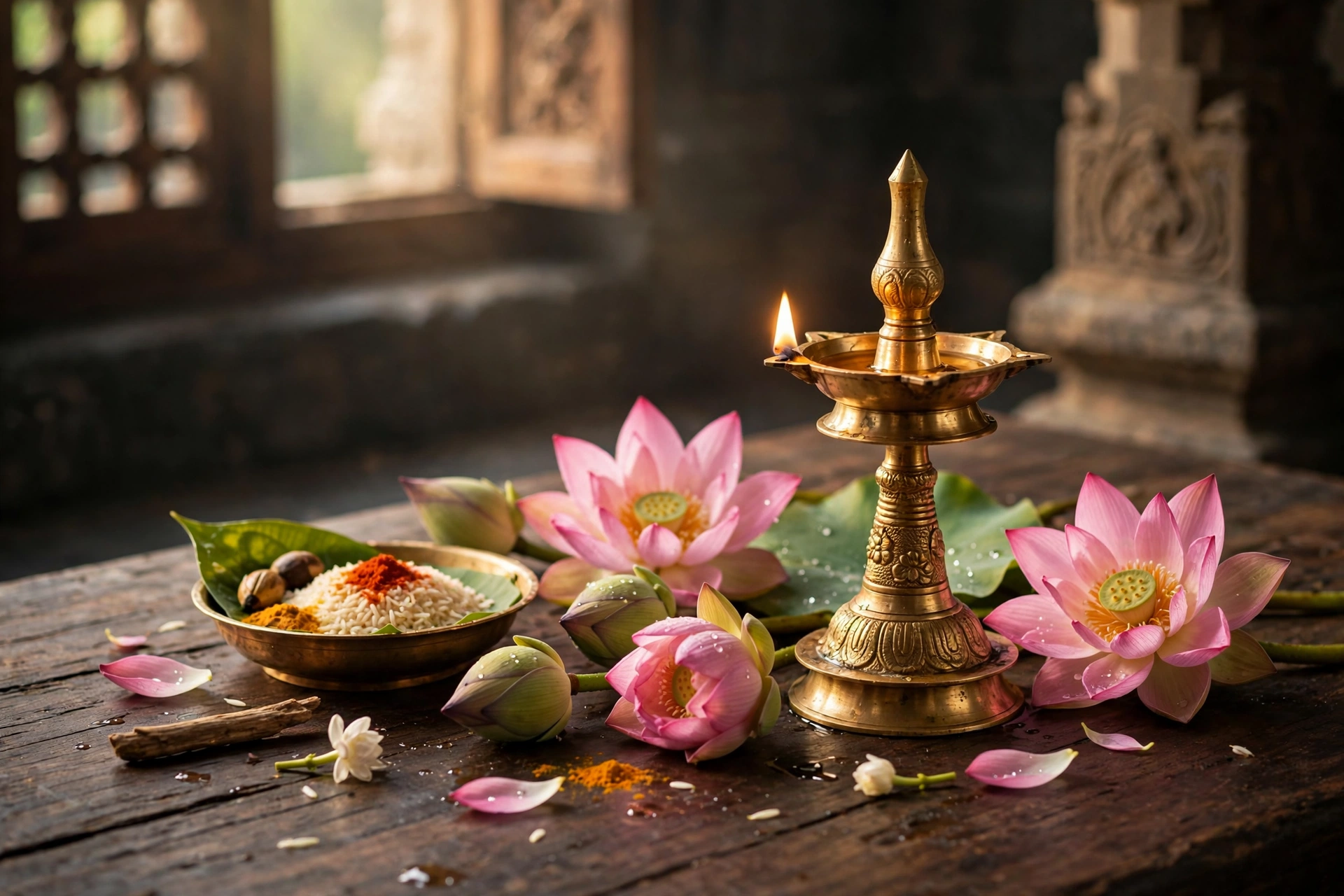
Piratti: The Divine Lady, the Bakery, and the Word Behind Them
Some words arrive with a single, settled meaning, and some arrive carrying several lives at once. Piratti is one of the second kind. Say it in a temple town in Tamil Nadu and it means something sacred. Say it in a street in Newcastle, Australia, and it means fresh sourdough. Say it near a Finnish dictionary and it sounds like a pirate. The same seven letters, three different worlds — and the most interesting part is that none of them is wrong.
This article follows all three. It starts where the word is oldest and most revered, in the Tamil devotional tradition, where the word means the Divine Lady herself. Then it looks at how the same word shows up in modern life, from a small bakery on Clyde Street to the dictionaries of northern Europe. If you came here wondering whether Piratti is a person, a place, or a mystery, you will leave with the honest answer, and a few good stories to go with it.
Quick Facts: Piratti
- What it is: A Tamil word, Pirāṭṭi, meaning “the Divine Lady”, “the Queen”, or “the Supreme Lady”.
- Most common meaning: In Sri Vaishnavism, Piratti refers to goddess Sri Lakshmi, the eternal consort of Lord Vishnu.
- In Shaivism: The same word is used for goddess Parvati, the consort of Lord Shiva.
- Word origin: From the Tamil word “Pirān”, meaning “the Great Lord”; Piratti is its feminine form, the consort of the Supreme Lord.
- Famous title: “Periya Piratti”, the Great Lady, is an epithet of Ranganayaki, the goddess of the Sri Ranganathaswamy Temple at Srirangam.
- In literature: Kundhavai Piratti is a princess in Kalki’s famous Tamil novel Ponniyin Selvan.
- A modern use: Piratti Bakery is a small Fino-Italian sourdough bakery in Newcastle, Australia, run by Tim Evans and Niamh Bellicanta.
- Language cousins: The Finnish word for pirate is “piraatti” and the Italian word is “pirata” — close cousins of Piratti, but not the same word.
- Is it a person? No. There is no verified evidence that it is the name of a real, living person.
- What is not verified: The exact date the word entered common use, and any connection between its different modern uses.
What Is Piratti?
The simplest honest answer is that Piratti is a title, not a name in the ordinary sense. In Tamil, it is a feminine honorific of the highest respect. It means the Great Lady, the Queen, the Divine Lady — the female counterpart of Pirān, the Great Lord. It is the word you use when ordinary words like “lady” or “goddess” are not grand enough.
That is why the word turns up most often in devotional writing. In the Sri Vaishnava tradition of Tamil Nadu, the title most commonly refers to goddess Sri, or Mahalakshmi, the eternal consort of Lord Vishnu, known in Tamil as Perumal. In the Shaivite tradition, the same title is given to goddess Parvati, the consort of Lord Shiva. In both cases the meaning is the same: she is not a minor figure standing beside the god. She is the sovereign power in her own right, the one through whom grace reaches the world.
There is a second, more everyday sense too. In Tamil usage, “piratti” can simply mean a lady, a mistress, or a noblewoman — a respectful way to speak of a woman of high standing. That is the sense that appears in old glossaries, where piratti is listed as “lady, mistress, goddess”, and piran as “lord, king, chief, master”. The word carries dignity in every register, from the temple to the street.
The Divine Lady: Piratti in Tamil Tradition
To understand the word properly, it helps to know the world she comes from. Tamil Nadu has one of the oldest living devotional traditions in the world, and its poetry and theology are full of divine couples: the Lord and his Lady, always together, never apart. In Sri Vaishnavism, that couple is Vishnu and Lakshmi. In Shaivism, it is Shiva and Parvati. In both, the goddess is not an afterthought. She is the mediator, the one who softens the Lord’s anger, carries the devotee’s prayers to him, and pours out grace in return.
The Sri Vaishnava acharyas gave this idea a name: purushakara, the role of the mediator. She is described as the purushakara, the one who speaks in favour of the devotee. The tradition teaches that the Lord, left to himself, might judge a soul strictly by its deeds. It is she who pleads for mercy, who reminds him of the devotee’s smallest good act, and who makes grace possible. Devotees therefore approach her first. The great hymns of the Alvars, the Tamil saint-poets, often begin by praising her before they turn to the Lord at all.
She is also described as eternally inseparable from him. The image is vivid and famous: Lakshmi dwells upon the chest of Vishnu, lodged there like golden lightning against a dark rain cloud. The poet-saint Nammazhvar, in the Tiruvaymoli, gives her the words, “I will not leave this place even for a moment.” She is the mark by which the Lord is recognised — the Sri on his chest, the reason he is called Sriman Narayana, the Lord who is always with Sri.
The acharya Ramanuja, who lived from 1017 to 1137 CE, and the later theologian Vedanta Desika both placed her at the centre of the path to liberation. In the Dvaya mantra, the most precious of the three secret mantras of the tradition, her name comes first: “Sriman Narayana” — the Lord who is with Sri. The mantra is even said to have been revealed by the Lord himself in answer to a request from Sri, who asked that the burden of souls be eased. That is her role in a single image: the Divine Lady asking on behalf of everyone else.
Periya Piratti and the Temples of Tamil Nadu
If there is one place where the title is most at home, it is Srirangam. There, in the great Sri Ranganathaswamy Temple, the goddess Ranganayaki is known by the titles Thayar, meaning Mother, and Periya Piratti, the Great Lady. She is the presiding goddess of the temple and the chief consort of Ranganatha, the reclining form of Vishnu who is the temple’s lord. She is a form of Lakshmi, and together the two are worshipped as the divya-dampatigal, the divine couple.
Ranganayaki is usually shown in the familiar form of Lakshmi: seated in the lotus pose, holding lotus flowers in her hands, calm and regal. Pilgrims who visit Srirangam seek her blessing first, and the temple’s festivals honour her alongside her lord. The title Periya Piratti is not decoration. It says that she is the senior lady of the temple, the mother of the place, the one whose presence makes the shrine complete.
The same pattern repeats across Tamil Nadu. Wherever a Vishnu temple stands, the goddess beside him carries a version of the same title. She may be called Sri Devi, Bhudevi, Andal, or by the name of the town itself — Maduraippiratti, the Lady of Madurai, is the goddess Meenakshi in that form — but the word always does the same work. It marks her as the Lady, the one whose dignity matches the Lord’s, and whose mercy is the devotee’s first hope.
Piratti in Literature: A Princess in Ponniyin Selvan
The word also lives in Tamil literature, and its most famous appearance is in Ponniyin Selvan, the great historical novel by Kalki R. Krishnamurthy. The novel, set in the Chola empire of the tenth century, follows the prince Arulmozhi Varman and the court around him. Among its most beloved characters is Kundhavai Piratti, the younger daughter of the emperor Sundara Chola and the sister of the two princes.
In the novel, Kundhavai is clever, brave, and politically shrewd — a princess who gathers intelligence, reads people, and steers events from behind the scenes while the men around her fight their wars in the open. The title “Piratti” after her name is not a surname. It is the honorific that marks her rank: the princess, the lady of the court. English summaries of the novel sometimes render it as “Kundhavai, the younger princess”, and the glossary of the English translation lists “Pirati — Lady, Royal Princess”. It is a small detail, but it shows how naturally the word sits in Tamil storytelling: a princess is a piratti because a piratti is a lady of the highest standing.
The novel’s popularity has carried the word far beyond Tamil Nadu. Ponniyin Selvan has been translated into English and adapted into hugely successful films, and readers who meet Kundhavai Piratti for the first time often go looking for what the word after her name means. The answer they find is the same one this article gives: a lady, a princess, a divine lady — a title of honour.
The Word in Other Languages: Pirates and Near Cousins
There is one more corner of the story, and it is the one that causes the most confusion. The word looks and sounds like the word for “pirate” in several European languages. In Finnish, a pirate is a “piraatti”. In Italian, a pirate is a “pirata”, and the plural is “pirati”. In English, the word pirate itself comes from Latin pirata, and before that from the ancient Greek peirates, from peira, meaning a trial or an attempt.
It is easy to see why someone might read the word and think of pirates. The letters line up, the sound is close, and the romance of the sea is never far from a word like this. But the resemblance is a coincidence. The Tamil word comes from Pirān, the Great Lord, and has nothing to do with the Greek root for piracy. The Finnish and Italian words come from the Latin and Greek tradition, and they arrived at a similar shape by an entirely different road.
That said, the confusion is not entirely unhelpful. It is a reminder that words travel, and that the same string of letters can mean a goddess in one language and a sea-robber in another. Anyone searching for the word should keep the two apart: if the page is about ships, treasure, and the high seas, it is talking about pirates. If it is about temples, goddesses, and Tamil devotion, it is talking about the Divine Lady. And if it is about bread, it is talking about Newcastle.
Piratti Bakery: Sourdough in Newcastle, Australia
The most concrete modern use of the word belongs to a small bakery on the other side of the world. Piratti Bakery is a Fino-Italian sourdough bakery in Newcastle, New South Wales, Australia. It sits at 50 Clyde Street, Hamilton North, inside the Clyde Street creative hub, a collective of makers and artists. It is run by the duo Tim Evans and Niamh Bellicanta, and it describes itself as a sourdough bakery, cafe, and community arts and ecology hub, creating on Awabakal land.
The bakery began in 2021, in its earlier days on Bolton and King Streets, as a sourdough workshop with friends pitching in. It gradually grew into a full bakery operation, and it has become one of the names on Newcastle’s best-bakery lists. The name is a deliberate blend, like the food: “Fino” for Finnish, “Italian” for the other half of the duo’s heritage. Finnish and Italian baking, side by side, in an Australian coastal city.
The baking itself is slow and serious. Everything centres on a living sourdough culture more than a century old, passed down through generations and carried across oceans. The bakery uses a meticulous four-day fermentation process, and the team has even cross-bred the culture with masa madre to create a signature sourdough pizza base. The menu blends the two traditions: Scandinavian-style cinnamon scrolls made with traditional Finnish techniques, and Italian focaccia, alongside sourdough loaves made by a slow Italian fermentation, with a thick crust and a delicate aroma. The cinnamon scrolls are the fan favourite — soft, fluffy, and made the Finnish way — and the same dough is used for pulla, the Finnish sweet white bread, plaited into a golden braid from a recipe passed down through Tim’s family.
The bakery keeps short hours — typically Thursday and Friday mornings, from around 7:30 in the morning — and it sells out. Alongside the bread there are focaccia, pizzas, bonbons, and a bacon and egg sourdough bagel that local food writers have praised. In the winter months the bakery’s nocturnal counterpart, Bellicanta’s, takes over the evenings with slow-fermented, hand-shaped sourdough pizzas by the fire. It is a small, local, much-loved place, and its name is now firmly attached to Newcastle’s food scene.
Public Presence and Relevance
The word’s public presence is scattered, which is exactly what you would expect from a word with three lives. In the devotional world, it is everywhere and nowhere at once: everywhere, because the hymns, commentaries, and temple traditions of Tamil Nadu use it constantly; nowhere, because it is a title rather than a brand, and it does not trend or advertise itself. A reader who searches for it in English will find Sri Vaishnava study sites, translations of the Alvars, and pages about Ranganayaki at Srirangam, all treating the word with the reverence it carries.
In the food world, its presence is small but vivid. Piratti Bakery appears in Newcastle’s best-bakery guides, in local food writing, and on Instagram, where visitors photograph the cinnamon scrolls, the focaccia, and the hand-painted sign outside. It is the kind of place that food lovers recommend to each other, and its short opening hours only add to the sense that it is worth the trip.
In the world of names, the word also turns up as a component of Tamil girls’ names. Narpiratti means “good lady” or “virtuous lady”, from nar, meaning good, and piratti, meaning lady or goddess. Madhuraippiratti means “the Goddess of Madurai”. These are devotional and poetic names rather than common given names, and they show how the word lends dignity to anything it touches.
There is no single community, company, or celebrity that owns the word. It belongs to a language, a faith, a novel, and a bakery — and each of them uses it in good faith.
What Is Not Verified About Piratti
This section matters, because a word with several meanings is exactly the kind of topic where confident claims outrun the evidence. Here is what is not verified, stated plainly.
There is no verified evidence that Piratti is the name of a real, living person. No reliable source names a person called Piratti with a biography, a career, or a public record, and this article does not invent one. The word is a title and a place name, not a personal name in any documented case.
The exact age of the word is not verified. It is certainly old — it appears in the devotional literature of the Alvars, who lived more than a thousand years ago, and in the commentaries of the acharyas — but no source gives a first recorded use or a date for when it entered common speech, and this article does not guess one.
Any connection between the Tamil word and the European pirate words is not verified, and the evidence points the other way: the two come from different roots and different language families, and their similarity is a coincidence. This article does not present them as related.
Any connection between the Tamil word and Piratti Bakery is not verified as a deliberate reference. The bakery’s name is explained by its owners as a blend of Finnish and Italian heritage, and no public source says it was chosen because of the Tamil goddess. The shared spelling is most likely a coincidence, and this article does not claim otherwise.
Details about the bakery beyond what local guides report are not verified here: its exact founding date, its full menu, its prices, and its current opening hours can change, and readers should check the bakery’s own pages before visiting. The owners’ personal details beyond their names and their role in the bakery are not verified and are not included in this article.
Finally, the popular claim that the word simply means “pirate” in Finnish or Italian is not verified as a translation. The Finnish word is “piraatti” and the Italian word is “pirata”; Piratti is neither. Readers should treat that claim as a misunderstanding.
Frequently Asked Questions
What does Piratti mean? Piratti is a Tamil word, Pirāṭṭi, meaning “the Divine Lady”, “the Queen”, or “the Supreme Lady”. In Sri Vaishnavism it most often refers to goddess Lakshmi, the consort of Lord Vishnu, and in Shaivism it refers to goddess Parvati.
Is Piratti a person? No. There is no verified evidence that Piratti is the name of a real person. It is a title of honour in Tamil, used for goddesses, princesses, and noblewomen, and it is also the name of a bakery in Australia.
Who is Periya Piratti? Periya Piratti, the Great Lady, is an epithet of Ranganayaki, the goddess of the Sri Ranganathaswamy Temple at Srirangam in Tamil Nadu. She is a form of Lakshmi and the chief consort of Ranganatha, a form of Vishnu.
What is the connection between Piratti and pirates? There is no verified connection. The Finnish word for pirate is “piraatti” and the Italian word is “pirata”, which look and sound similar to Piratti, but the Tamil word comes from “Pirān”, meaning the Great Lord, and the pirate words come from Latin and Greek. The resemblance is a coincidence.
What is Piratti Bakery? Piratti Bakery is a small Fino-Italian sourdough bakery in Newcastle, Australia, at 50 Clyde Street, Hamilton North. It is run by Tim Evans and Niamh Bellicanta, and it is known for its century-old sourdough culture, Finnish cinnamon scrolls, and Italian focaccia. Its opening hours are short, typically Thursday and Friday mornings, and readers should check its own pages before visiting.
Who is Kundhavai Piratti? Kundhavai Piratti is a character in Kalki’s Tamil historical novel Ponniyin Selvan — a clever and brave Chola princess, the daughter of Emperor Sundara Chola. “Piratti” in her name is the honorific marking her rank as a princess.
Conclusion
It turns out to be a word with three honest lives, and each of them is worth knowing. In Tamil Nadu, it is the Divine Lady — Lakshmi on the chest of Vishnu, Parvati beside Shiva, the Great Lady of Srirangam, the mother and mediator whose mercy comes before the Lord’s judgement. In a novel, it is a princess who out-thinks a court. In Newcastle, it is a small bakery where a century-old sourdough culture meets Finnish cinnamon scrolls and Italian focaccia. And in the dictionaries of Europe, it is a near cousin of the pirate, a reminder that the same letters can mean very different things in different tongues.
If you came here wondering whether the word was a person, a place, or a puzzle, you now have the honest answer: it is a title, a bakery, and a coincidence, all at once. The most important of the three is the first, because it is the oldest and the most revered, and it is the one that explains why the word carries such dignity wherever it appears. For more background on the goddesses, temples, and traditions behind the word, a general reference is a useful place to continue reading.
